-
 play_arrow
BOX OFFICE RADIO
-
play_arrow
18:00 - The Wonderful World Of Musicals (Adrian & Fizz) 09 JUL 2024
-
play_arrow
AUDIO Paul Scott
-
play_arrow
AUDIO Paul Scott
-
play_arrow
AUDIO Paul Scott
-
play_arrow
AUDIO Paul Scott
-
play_arrow
AUDIO Paul Scott
-
play_arrow
AUDIO Paul Scott
-
play_arrow
AUDIO Paul Scott
-
play_arrow
BEDS Paul Scott
Interview – Paul Chihidi from The Actors’ Trust – Mental Health in the Arts
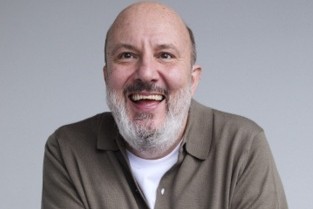
Paul Chahidi was born and raised in Iran until the family left during the Iranian Revolution in 1979 and settled in the United Kingdom. He went on to graduate with a masters in Arabic and Persian from Trinity College, Cambridge and then trained as an actor at the Royal Central School of Speech and Drama.
Here he comments on research into the mental health and loneliness epidemic among people in the creative arts, which has revealed quite shocking numbers….
How would you describe your relationship with mental health as a performer?
“A very variable relationship! There are times when you feel like you’re just about on top of things, and times when you feel like things are falling apart. That, perhaps predictably, becomes more acute when you’re unemployed. However, it’s important to stress that I’ve had dips while fully employed, too.”
Was there a moment in your career where you became more aware of your own wellbeing?
“In some ways it started at drama school, and especially during the final year ‘Agent’s and Casting Director’s Showcase’, where you perform a 2-minute monologue to industry professionals, in the hope of getting work and/or representation. Some people in our year seemed to hit the ground running and were scooped up by agents and casting directors almost immediately and others, like me, were completely left out in the cold.
“It was at that point that I realised I had to have some anchor for my self-worth other than my work, and that I had to double down on my self-esteem and sense of self-worth by finding it independently from what I had chosen as a profession.
“In addition to that, probably my first prolonged bout of unemployment – about four years after I graduated from drama school when I didn’t have any work for nearly eight months. That was hard, but on plus side, I did become a very proficient painter and decorator.”
Do you think being a performer has strengthened or challenged your mental health overall?
“Both. I’ve tried to build resilience by having things other than just my acting at the centre of my life. For instance, family, friends, reading, staying fit (with variable results!) and, well, living life rather than waiting for it to happen or hoping that the phone will ring.
“But it’s a challenge to bridge the gap between needing to be vulnerable and emotionally open to produce good work as an actor or give your best at an audition, and the polar opposite required to deal with rejection. You have to put on an invisible suit of armour and not allow yourself to care too much when a job doesn’t work out or when you get to the final round and you’re just not the one they choose.”
How do you personally deal with rejection, especially in audition settings?
“Before the audition, I try to get into a positive frame of mind, do the preparation, and go in trying to focus on unlocking the character rather than wanting to get the job.
“It’s hard at first, but it’s a habit you can develop and when you do, it can be incredibly freeing.
It also stops you from being needy or desperate in the meeting, which is not what anyone wants and will definitely negatively impact your self-esteem afterwards.
“Post audition I tell myself: ‘You did the best you possibly could at that given moment and you can do no more. Job done. You can hold your head up high with no real regrets. The rest is out of your hands. Now get on with the rest of your day/life.’”
Have you ever felt pressure to “push through” despite struggling mentally?
“Yes. There is a time and a place for ‘pushing through’, but that is only effective as a short-term survival mechanism. If you do that over prolonged periods without the release of being able to talk about it, that’s when bad things can happen.
“The recent study by Actors’ Trust which polled 3,700 actors and stage management professionals found that around three quarters of actors (78%) have experienced a problem with their mental health in the last three years, such as feeling anxious or depressed, and even more concerningly, levels of suicidal thoughts amongst the community far exceed national averages, especially among younger and emerging professionals.
“There is far too much shame in our industry about admitting we’re struggling and seeking help. We need to end that stigma, which is why I think the Actors’ Trust campaign to highlight the mental health struggles within our industry and to provide support is so incredibly important.”
Does the unpredictability of work ever affect your mental health?
“Yes. Even though it’s absolutely what I signed up for. It can be extremely difficult to not know when your next pay check will be, or when you’ll land your next role.”
Have you seen attitudes change in the industry over time?
“Yes, but we still have a long way to go and there is a lot of work to be done. At Actors’ Trust, we’re trying to spread awareness of how professionals in our industry are affected mentally and financially – and we’re encouraging actors and stage managers to speak of their experiences and raise awareness too.”
What advice would you give to young performers entering the industry?
“Firstly, it’s a marathon, not a sprint. Try to avoid assessing your self-worth by comparing yourself to others in the profession. Find things outside acting that bring you joy, whether it’s your family, a hobby, spending time with friends, walking in nature, going to see an exhibition or play, or getting involved with community activities. Anything that stops you waiting for the phone to ring is a good thing.
“Also, get together with other creative people often and generate your own work. And don’t ever feel afraid to ask for help when you need it, whether that’s talking it through with a loved one or getting in touch with an organisation like Actors’ Trust who are here to help, no matter how great or small your problem.”
For more information on Actors’ Trust, its report, and its grants programme, visit www.actorstrust.org.uk