-
 play_arrow
BOX OFFICE RADIO
-
play_arrow
18:00 - The Wonderful World Of Musicals (Adrian & Fizz) 09 JUL 2024
-
play_arrow
AUDIO Paul Scott
-
play_arrow
AUDIO Paul Scott
-
play_arrow
AUDIO Paul Scott
-
play_arrow
AUDIO Paul Scott
-
play_arrow
AUDIO Paul Scott
-
play_arrow
AUDIO Paul Scott
-
play_arrow
AUDIO Paul Scott
-
play_arrow
BEDS Paul Scott
Review – Marie and Rosetta – @Sohoplace, London
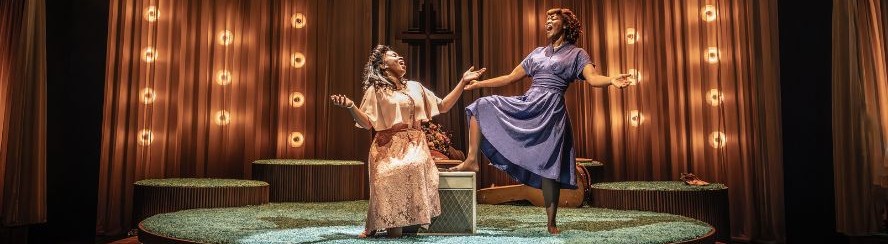
Marie and Rosetta at Sohoplace is the kind of show that quietly rearranges your understanding of music history while you are having a great night at the theatre. Rather than presenting a sweeping biographical piece, the play zooms in on a single rehearsal between gospel legend Sister Rosetta Tharpe and a young Marie Knight. That tight focus gives the story a sense of intimacy rarely found in jukebox style music dramas and Marie & Rosetta certainly hits all the high notes.
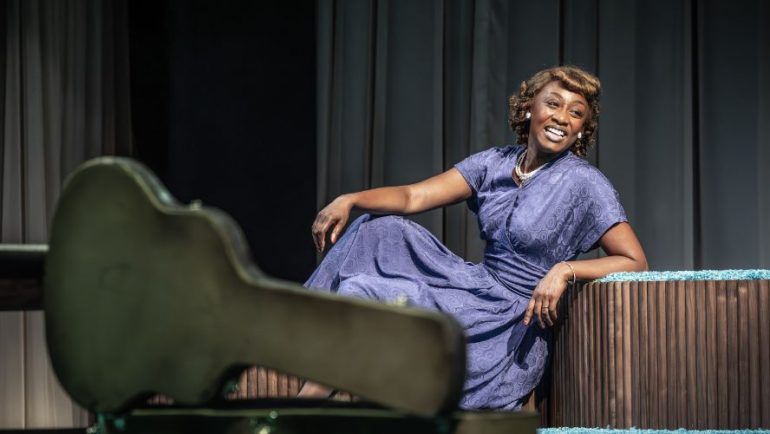
Beverley Knight’s Rosetta is commanding from the moment she walks on stage. She captures the larger than life charisma of Sister Rosetta Tharpe with a performer’s confidence that feels completely natural. Knight’s musical background gives the role a thrilling authenticity, when she sings, it’s a masterclass. Her voice is rich, powerful and full of gospel grit. Beyond the music, Knight also brings warmth and wit to the role, showing Rosetta as both a savvy show woman and a complex woman navigating fame, faith and expectation.
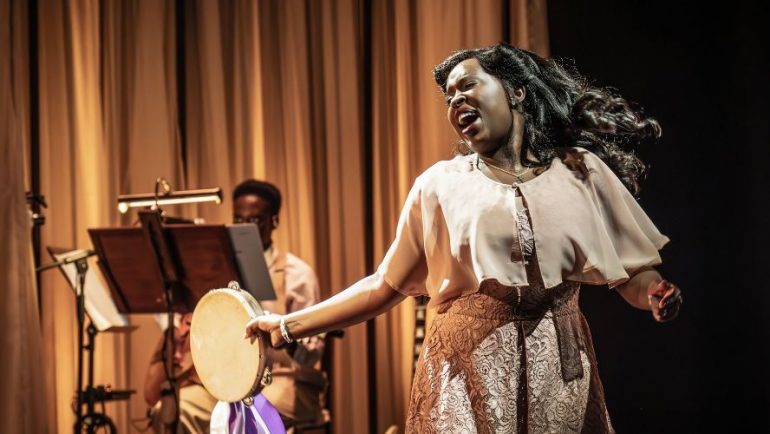
Opposite her, Ntombizodwa Ndlovu gives a beautifully measured performance as Marie Knight. She begins the play with a quiet reserve that perfectly suits Marie’s deeply religious upbringing and initial uncertainty about stepping into Rosetta’s world of touring and performance. Ndlovu’s voice is incredible, she has such a presence on the small stage, she not only takes us to church with every single note, she takes us on every single step of the journey. What makes the performances particularly compelling is how the two actors build the evolving relationship between Rosetta and Marie.
Knight’s bold, worldly Rosetta pushes and provokes, while Ndlovu’s Marie slowly finds her own voice adding bits of sass along the way. Their musical duets become the emotional centre of the production, moments where mentorship, admiration and occasional tension all play out through song.
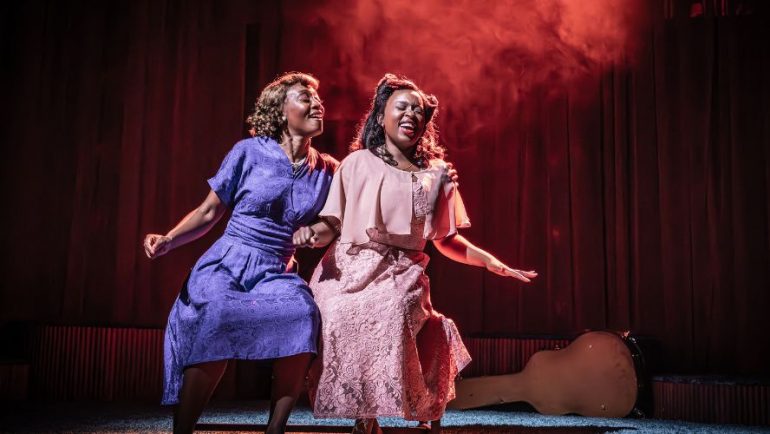
Together, Knight and Ndlovu create a dynamic that feels authentic to the history behind the story. Their performances don’t just recreate the music of Rosetta and Marie; they capture the spirit of two women whose partnership helped shape the sound and energy of modern popular music. You can feel the roots of rock ’n’ roll in the rhythms, long before artists like Chuck Berry or Elvis Presley took the sound mainstream. The play subtly reminds you that Rosetta’s influence ran far deeper than many audiences realise.
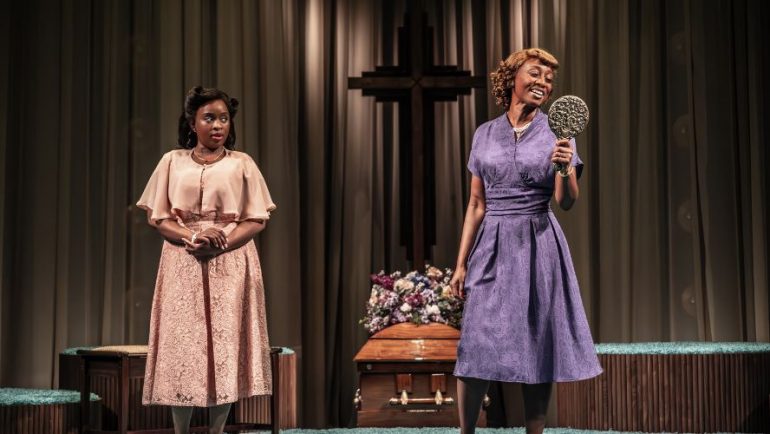
Monique Touko’s vision for this intimate piece shines through with clear direction. Her detailed and precise staging choices are made perfectly for a small intimate space in the round. With only two characters and one set it could be hard to keep the momentum going but as a collective, they manage it. Liam Godwin’s musical arrangements hit the spot. Giving the audience a quick fix of rhythm, blues, jazz and gospel in short bursts then straight back in to the story, by the end the audience are ready to be hit with the epic finale.
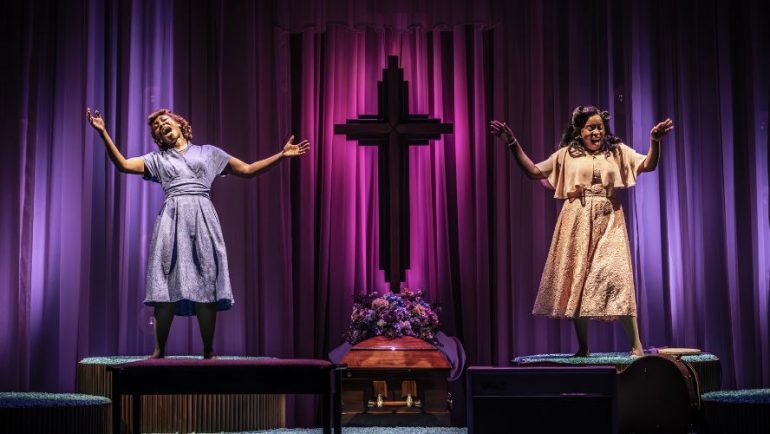
Lily Arnold’s set is deceptively simple, essentially a rehearsal space but that minimalism works in the play’s favour leaving room for the performances and the music to carry the evening. The baby pink curtain ruffles, raised circular stages and vintage lighting give that subtle hint to feminism adding yet another layer to this masterpiece. An all female band is usually a rarity in theatre but a necessity in this production, they don’t just accompany the duo they are very much part of the show. When the guitars kick in and the harmonies land, the room feels closer to a live gospel concert than a traditional play.
What lingers after the curtain is the sense that you’ve witnessed a hidden chapter of cultural history. Marie and Rosetta does not just celebrate two extraordinary performers playing two extraordinary performers it restores them to the centre of a story that often forgets them. By the end, the audience isn’t just applauding a performance they are applauding a legacy that helped shape modern music.
**** Four Stars